
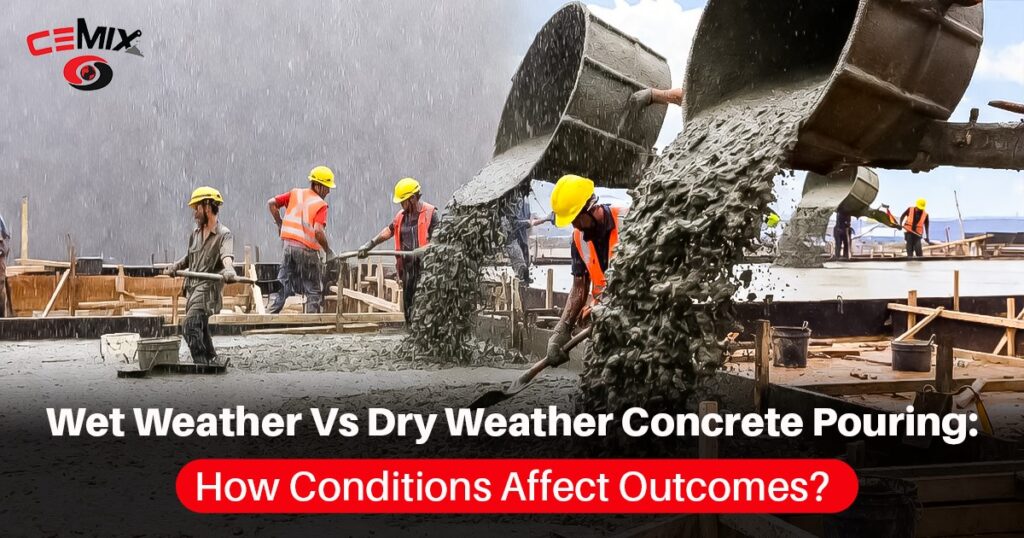
The process of pouring concrete is important for its aesthetics, durability and overall strength of the project. Both dry and wet weather affect the pouring of concrete, but in different ways. Knowing how conditions affect setting, strength, and surface finish helps you choose the right approach for each pour.
In this blog, we’ll discover the secrets of right concrete placing, the best weather for concrete placing, wet or dry and expert tips for best results.
Why Does The Weather Matter?
Concrete gains strength through hydration, a chemical reaction between cement and water that depends on consistent moisture and temperature.
In both extremely wet and extremely dry conditions, that balance is disturbed, which can lead to reduced strength, cracks, surface defects and long‑term durability issues. Weather at placement and during early curing (the first 24–72 hours) is especially critical for outcomes.
How Cold Weather Affects Concrete Pouring?
Pouring concrete in rain or damp weather changes the mix. Extra water from rain, wet forms, or a soaked base enters the concrete. This upsets the water-cement balance.
The added water weakens the paste. It boosts bleeding, too. The surface turns soft and porous. Over time, it may dust, flake, or scale.
Rain on fresh concrete washes away the top cement. This exposes coarse aggregate. It also cuts the bond for sealers or toppings.
To cut risks, cover the pour with tarps. Use well-drained bases. Skip extra water on site. Wait to finish until the bleeding water and rain are gone. Do not throw them back in.
How Does Hot And Dry Weather Affect Concrete Pouring?
Dry, mild weather works best for pours. It allows for even curing. Setting times stay predictable. Concrete hits the target strength.
Hot, dry, or windy conditions cause issues. Air pulls moisture from the surface fast. It dries before water rises from inside. This leads to plastic shrinkage cracks. The top crusts and turns brittle.
Crews shade or use cool materials to manage heat. They dampen the base and forms lightly. Admixtures like set retarders slow the setting.
Early curing matters most in dry weather. Apply curing compounds right away. Use wet burlap or plastic sheets. Schedule pours for cool times, like early morning or evening. This cuts evaporation.
Expert Tips For Best Results
- Check the forecast and schedule major pours for moderate temperatures, low wind and no heavy rain whenever possible.
- In wet weather, protect the site with covers, control run‑off, and never finish or trowel standing water back into the surface.
- In dry or hot weather, pre‑dampen subgrades and forms, avoid overworking the surface, and start curing as soon as finishing is complete.
- Work with your concrete supplier to adjust mix design and admixtures to suit expected conditions, rather than adding water on site to change the lump.
Get Reliable Professional Support For Weather-Sensitive Concrete Work With Cemix
At Cemix Vic, we’re one of the most reliable and trusted concreters offering world-class concrete services.
We’re a team of expert concreters well-known for delivering the finest in concrete pouring, finishing, repair, and more.
Our commitment to excellence is evident in every project we undertake, ensuring strength, durability, and aesthetic appeal.
Whether you want top-notch concrete in Campbellfield or concrete in Doreen, we’re available at your service.
Contact Cemix Vic today to get a free quote and successfully build the project of your dreams!
Frequently Asked Questions
What is the best temperature and weather for pouring a concrete slab?
The best temperature for pouring concrete is between 10 °C and 16 °C, and the weather should be moderate with low winds for optimal results.
Is concrete stronger if it cures in wet or dry conditions?
Dry, mild weather is usually better because it allows even curing and predictable setting times. This helps concrete reach its target strength.
How long should concrete be protected from rain after pouring?
It is best to protect concrete from rain for at least 8-24 hours for the best results. To reduce these risks, cover the pour area with tarps, use well‑drained bases, avoid adding extra water on site, and delay final finishing.