
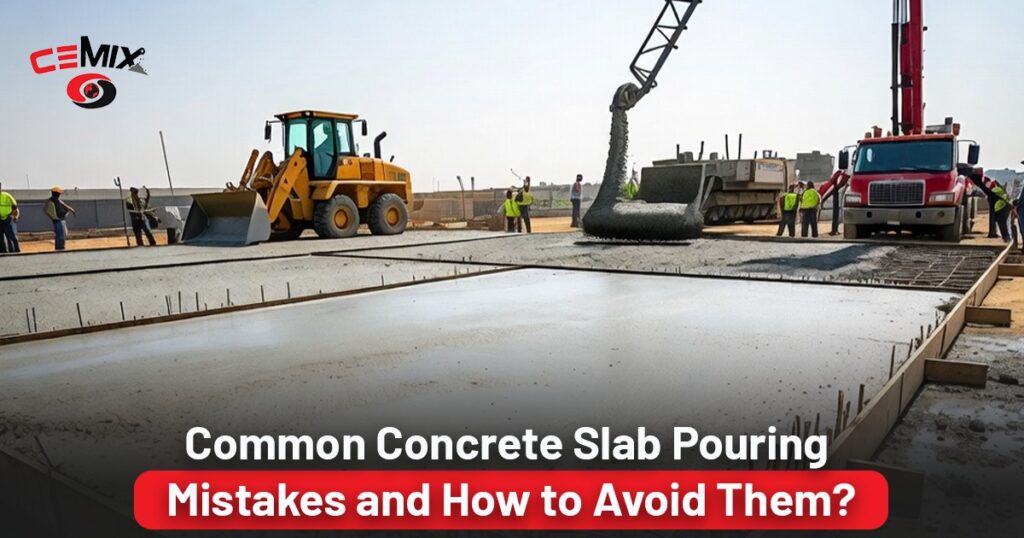
If you’re building your dream construction project, then making concrete slab pouring mistakes might lead to cracks and compromise the structural integrity of the structure. Whether you are building driveways, backyard patios, a floor or a foundation, making these mistakes costs you your hard-earned money and time.
This expert guide will delve into those costly mistakes and expert tips to prevent them. So, stay with us till the end and build your project hassle-free!
Poor Base Preparation
One of the biggest mistakes is pouring concrete over loose or uneven ground. The base should be compacted properly and made level before the pour begins. If the sub-base is weak, the slab can settle, crack, or become uneven over time.
Incorrect Slab Thickness
A slab that is too thin may not handle the intended load. For example, a patio, driveway, or shed floor may each need different thickness levels. Always match the slab design to its purpose so it can perform well long-term.
Adding Extra Water
It can be tempting to add extra water to make the mix easier to spread, but this weakens the concrete. Too much water can lead to surface dusting, shrinkage cracks, and lower durability. A workable mix is important, but it should stay within the right ratio.
Skipping Reinforcement
Reinforcement helps concrete handle stress and movement better. Without mesh or rebar, the slab is more likely to crack under pressure or ground movement. Even when reinforcement does not stop all cracks, it often helps control them.
Poor Formwork Setup
Forms hold the concrete in shape while it sets, so they need to be straight, level, and firmly secured. If the formwork shifts during the pour, the slab may end up uneven or out of square. Checking the forms before pouring saves a lot of trouble later.
Pouring In Bad Weather
Hot sun, heavy rain, or very cold conditions can all affect the quality of a slab. Heat can make the concrete set too fast, while rain can damage the surface finish. It is usually better to pour when conditions are stable and manageable.
Rushing The Finishing Process
Finishing concrete too early or too late can leave marks, weak spots, or surface defects. The slab should be screeded, floated, and finished at the right stage of setting. A rushed finish often shows up later as an uneven or poor-quality surface.
Neglecting Curing
Curing is just as important as the pour itself. If concrete dries too quickly, it can shrink and crack before it gains full strength. Keeping the slab moist and protected during curing helps it harden properly.
How To Prevent Concrete Pouring Mistakes?
- Start with careful planning by measuring the slab, calculating the concrete needed, and choosing the right mix for the job.
- Then prepare the site properly. Excavate the area, compact the base, and make sure the forms are level and firmly supported.
- Finally, try to pour in mild, dry weather and have enough helpers on hand so the concrete can be placed and finished before it starts to set.
Get High-Quality Concrete With Cemix, Vic.
Cemix Vic is a top supplier of concrete solutions that are tailored to your construction needs.
Our team of highly skilled and experienced professionals ensures strength, durability, and aesthetic appeal in every project.
Whether you want high-quality construction materials or expert services, we’re your ultimate building partner.
Contact Cemix Vic today and build the construction project of your dreams!
Frequently Asked Questions
1. What is the correct thickness for a concrete slab?
The correct thickness for a concrete slab depends on its purpose and the site’s engineering requirements. However, 85 mm to 100 mm thickness is generally used for most purposes.
2. How do you avoid cracks in a concrete slab?
You can avoid cracks in a concrete slab by strictly controlling the water-cement ratio, ensuring the ground is properly compacted, and allowing the concrete slab to cure slowly.
3. What is the best weather for pouring concrete?
The best weather for pouring concrete is clear and calm, with an air temperature between 10°C and 16°C. This allows the concrete to cure slowly.