
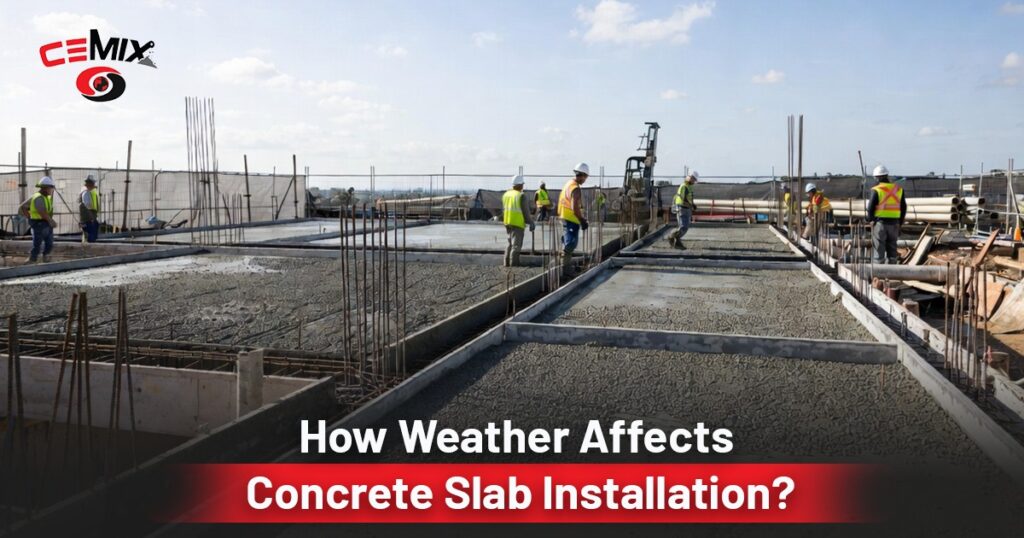
If you’re thinking of installing a concrete slab for your project, then knowing the right weather to do it is crucial. The weather significantly affects concrete curing time and may lead to compromised structural integrity, cracks, and loss of strength.
Choosing the right weather for installing concrete slabs is what separates a successful project from a gamble.
This blog explores how weather affects concrete slab installations and the best weather and timing for them.
This helps you in making informed decisions, saves your valuable time and money. So, stay with us till the very end!
How Does Hot Weather Affect Concrete Installations?
Hot weather can make concrete lose moisture too quickly. This makes the surface dry before the slab has fully cured, leading to cracks, weak spots, and a rough finish.
Also, high heat reduces the time available for placing and finishing the concrete. That makes the job harder and increases the chance of mistakes.
Therefore, workers often need to move faster or use special curing methods in hot weather.
How Does Cold Weather Affect Concrete Installations?
Cold weather slows down the curing process. The concrete takes longer to gain strength. More importantly, if the slab freezes too early, it can suffer serious damage.
Because of this, contractors often use insulation, heated blankets, or special additives in cold weather. These steps help keep the slab warm enough to cure properly.
How Do Wind, Rain & Humidity Affect Concrete Installations?
When strong winds blow across fresh concrete, they can pull moisture from the surface too quickly. This may cause cracking or uneven curing.
Rain is another concern. If it falls too soon after pouring, it can damage the finish or weaken the top layer. On the other hand, humidity is not always harmful, but it still needs to be managed carefully during curing.
Which Weather Is Best For Concrete Installation?
The best time to install a concrete slab is when the weather is stable. The day should be dry, mild, and calm. This ensures the concrete has a better chance of setting and curing without problems. If the weather forecast looks uncertain, it is better to wait.
Expert Tips For Best Results
- Check the weather forecast before pouring.
- Avoid pouring during extreme heat or cold.
- Follow proper curing methods after the pour.
- Use the right mix of adjustments for the weather.
- Protect fresh concrete from rain and strong winds.
Get Top-Quality Concrete With Cemix Vic
Cemix Vic is a trusted and well-known concrete supplier that offers top-tier concrete services for world-class construction projects.
We understand the needs of our clients and provide them with tailored concrete solutions to meet their project needs.
Our team of expert craftsmen understands the intricacies of concrete work and ensures flawless results in every project.
Whether you want high-quality concrete for your commercial or personal projects, we’re your all-time trusted building partner.
Contact Cemix Vic today and build the projects of your dreams with our quality construction supplies!
Frequently Asked Questions
1. What is the best temperature for pouring concrete?
The best temperature to pour concrete is somewhere between 10°C and 16°C. This ensures that concrete is curing at the optimum rate, preventing repaid moisture loss and cracking while gaining strength consistently.
2. How does cold weather affect concrete curing?
Cold weather slows down hydration, so the slab gains strength more slowly. If the concrete gets too cold too soon, especially below 0° C, it can cause internal expansion leading to loss of strength and damage.
3. What happens if concrete dries too fast?
When concrete cures too fast, it may shrink, develop cracks, and end up weaker than intended. Plus, fast drying also makes finishing harder, making the surface look uneven or dusty.