
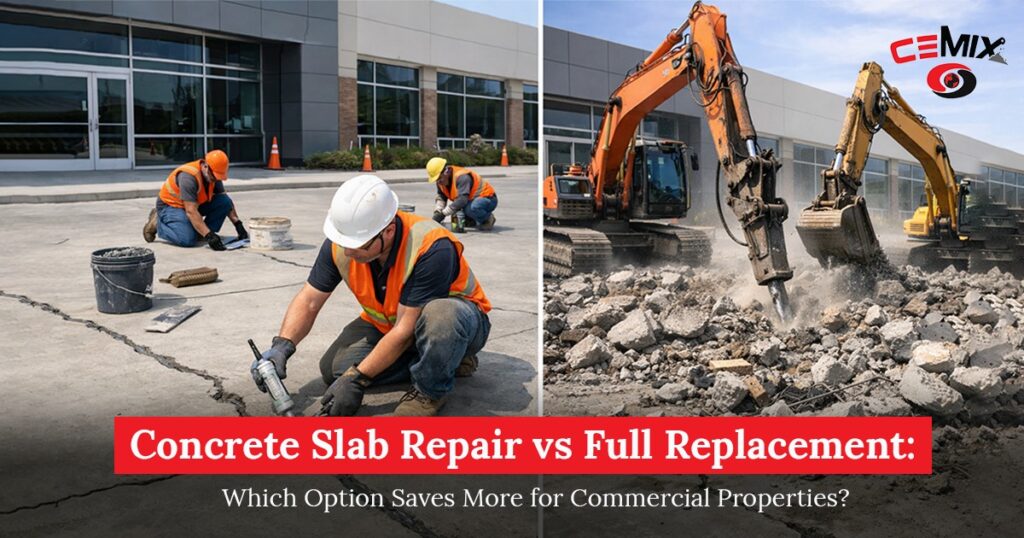
Concrete slabs are the soul of commercial buildings, and even minor damage can create serious problems. The damage compromises the structural integrity of the building and affects people’s safety.
However, repairing or replacing it is a costly process and needs time and money. In this blog, you’ll learn about the types of damage in concrete slabs and expert answers on when to repair your concrete slab or replace it.
Furthermore, we’ll also share crucial information about reliable and trusted Concrete Supplies in Epping to make your construction journey stress-free and affordable.
Types Of Concrete Slab Damage
Different damage needs a different level of solution. Understanding your damage type is the best way to get the right solution without hurting your pocket.
Minor Damage: Tiny cracks, small flaking, small holes, or a little water seepage.
Moderate Damage: Wider cracks, several problem spots, large areas of surface damage, or water coming inside.
Severe Damage: Deep cracks, heaving or sinking sections, or structural problems.
Key Factors To Consider For Concrete Slab Repair Vs. Replacement
Age: If your concrete slab is not too old and has minor cracks, then repairing is the best solution. However, for older concrete with structural damage, replacement is a better option.
Timeline: Another crucial factor to determine is how long you will own the property. If it’s a rental, it’s best to repair it; if you live there for decades, it’s best to get a replacement.
Disruption: How do repair and replacement affect operations? Is it affecting your daily life?
Value: If the replacement increases the value of your space, then it’s best to consider replacement instead of repairing the concrete.
When Repair Is The Better Choice?
Concrete slab repair is often the better option when the damage is small or limited to one area. For example, minor cracks, small chips, or slight unevenness can usually be fixed without replacing the entire slab.
Repair is often suitable when:
- The slab is still structurally sound.
- The problem has been caught early.
- The business needs a fast and affordable solution.
Additionally, repair usually causes less disruption to daily operations. This makes it a practical choice for many commercial properties that cannot afford long downtime.
When To Consider A Full Replacement?
On the other hand, full replacement is the better option when the slab has major damage. If the concrete is badly broken, sinking in several places, or failing because of poor soil support, repairs may not last very long.
Replacement may be the smarter choice when:
- The base underneath is unstable.
- Cracks are wide and widespread.
- The slab has already failed more than once.
- The property will carry heavier loads in the future.
Although replacement costs more upfront, it can reduce the risk of repeated repairs. As a result, it may offer better value over time.
Get High-Quality Concrete Slabs With Cemix Vic
Cemix Vic, one of the most reliable suppliers of concrete in Campbellfield, offers top-tier concrete services to meet all your construction needs.
We’re a team of expert professionals dedicated to delivering the finest concrete solutions tailored to your unique needs.
Our team comprises seasoned experts who understand the intricacies of concrete work, ensuring flawless results every time.
Whether you need to get your concrete slab repaired or a top-notch replacement, we’re your ultimate solution.
Contact Cemix Vic today and build the project of your dreams with our quality concrete slabs!
Frequently Asked Questions
1. What are the warning signs that concrete damage is getting worse?
The key warning signs of concrete damage are:
- Widening and deepening cracks
- Brown or red discolouration
- Uneven settling or sinking
- Exposed internal steel reinforcement.
2. How much does concrete slab repair cost in Australia?
Concrete slab repair in Australia typically costs somewhere between $50 to $500 per m² or linear metre. It depends on different factors such as the severity of damage, the service provider, etc.
3. What causes concrete slab cracking in commercial buildings?
The major causes of concrete slab cracks in commercial buildings are structural overloading, drying shrinkage, temperature fluctuations, different soil settlement and poor construction practices.